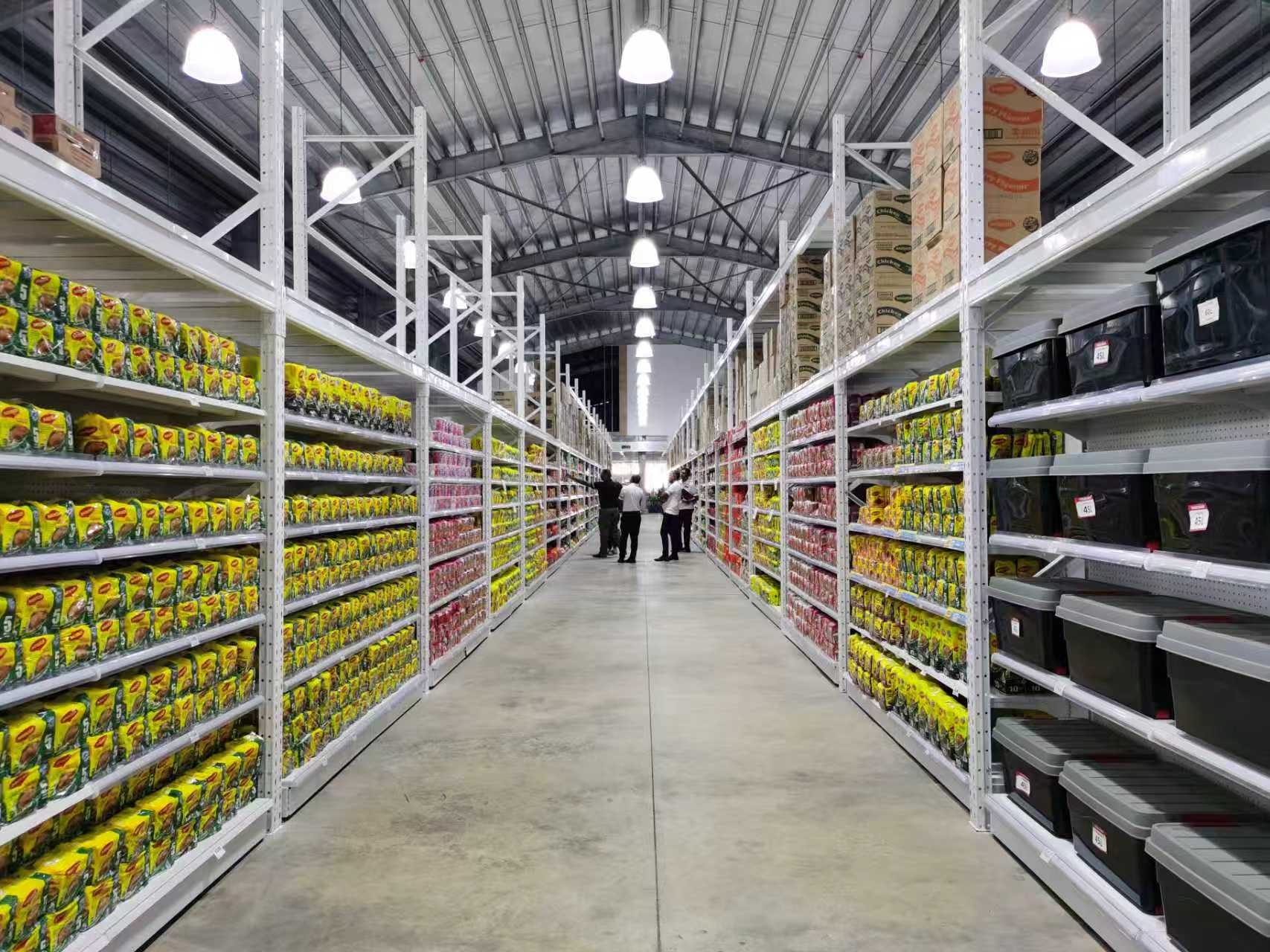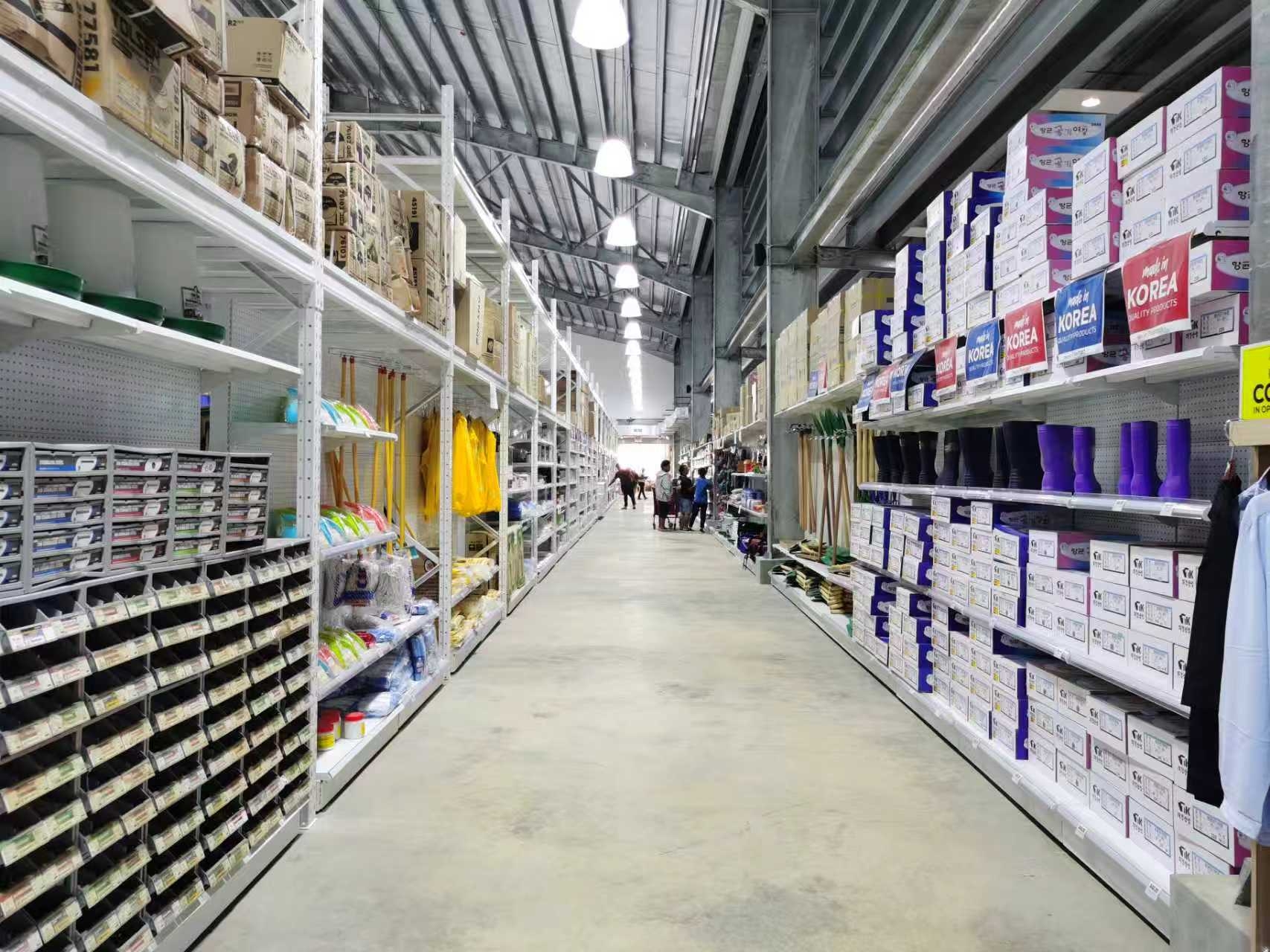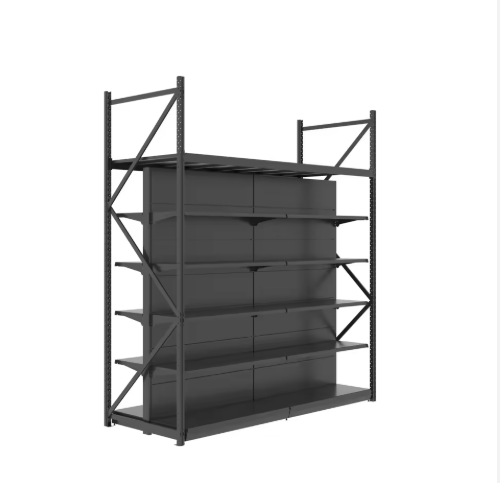






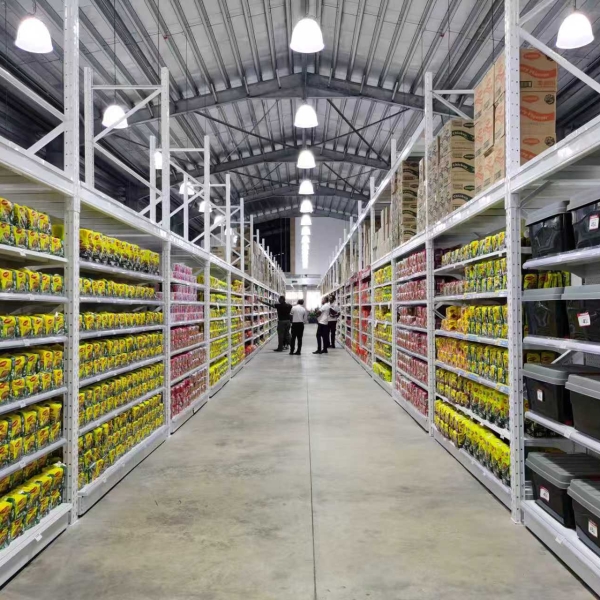
Heavy-duty warehouse-style supermarket shelving is a high-load-bearing, high-density storage system designed for large warehouse-style supermarkets (such as Costco and Sam's Club). It combines retail display and storage functions, with key features including strong single-shelf load capacity (typically 120kg+), high space utilization, and a modular design. It is widely used in large supermarkets in Europe, the Americas, and globally, supporting the "bulk purchasing, low-price selling" business model.
Key Advantages of Warehouse-Style Supermarket Shelving Systems:
High-Density Storage: Shelving height can reach 12-15 meters, utilizing vertical space and increasing storage density by 3-5 times.
Efficient Replenishment: Seamless connection between retail and warehouse shelving allows for direct replenishment by forklifts, increasing replenishment efficiency by over 60%.
Cost Optimization: Modular design, easy installation, low maintenance costs, and a service life of 15-20 years.
Safe and Reliable: Rigorously tested with anti-tipping and anti-falling designs, suitable for frequent loading and unloading of bulk goods.
Customer Experience: Neat product display and full-case presentation, aligning with the "bulk buying" consumer habits of warehouse-style supermarkets.
Typical Application Scenarios and Cases
1. Costco Supermarket, USA
Retail Area: Lozier heavy-duty double-sided shelving, 180kg load capacity per shelf, displaying food, daily necessities, and home appliances.
Storage Area: Interlake Mecalux beam-type racking, 2000kg load capacity per shelf, storing full pallets of goods.
Cold Chain Area: Metro stainless steel heavy-duty shelving, corrosion-resistant, suitable for -20℃ low-temperature environments.
2. Aldi Warehouse Supermarket, Europe
Retail Area: Spieth European-style heavy-duty shelving, narrower uprights, higher precision, displaying premium food and wine.
Storage Area: Dexion narrow-aisle racking, 10 meters high, aisle width only 1.8 meters, maximizing space utilization.
Key Considerations for Selection and Installation
Needs Assessment
Determine the weight, dimensions, and quantity of goods to be stored, and calculate the required shelf length × width × height.
Differentiate between retail area and storage area needs: the retail area focuses on display, while the storage area prioritizes density and load-bearing capacity.
Load-Bearing Capacity Matching
Retail area: Choose heavy-duty shelving with a capacity of 120-200 kg per layer, suitable for full cartons of goods.
Storage area: Select storage shelving with a capacity of 500-3000 kg per layer based on pallet weight, ensuring safe forklift operation.
Summary: Heavy-duty warehouse-style supermarket shelving is the basic infrastructure of large warehouse supermarkets. Its design integrates retail display and storage functions, supporting efficient operations through high load-bearing capacity, modularity, and standardization. When choosing shelving, it's necessary to consider product characteristics, space constraints, and regional standards to ensure a balance between safety and efficiency.
Would you like me to recommend suitable shelving types, brands, and load-bearing solutions based on your supermarket type (warehouse-style/community-based), single-layer height, estimated product weight, and available space?
Corporate Email:Lisa@warehouserackfactory.com,Ms. Wu