






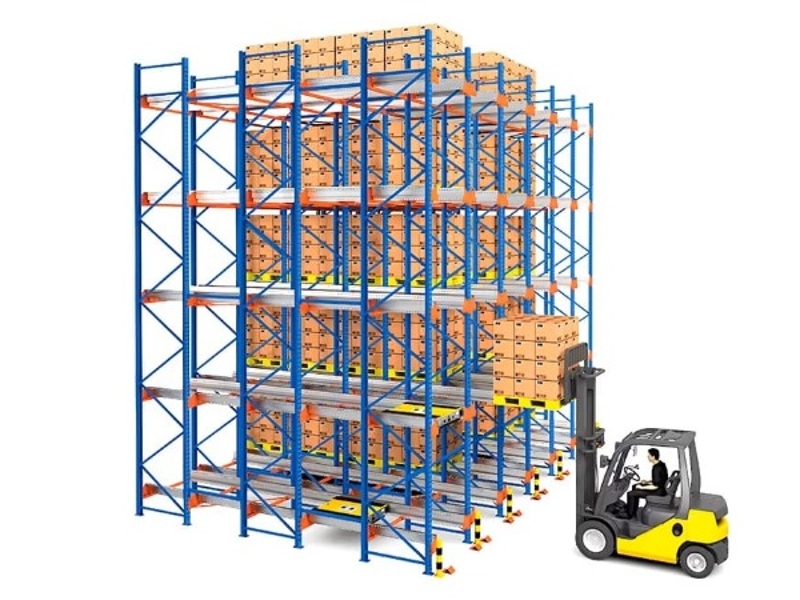
Here is a concise introduction to the core features of shuttle racking systems, making it easy to quickly understand and select the right model:
Definition and Composition: Shuttle racking is a semi-automated high-density warehousing system. Its core consists of the racking body (with layer rails), shuttle vehicles (two-way/four-way, lithium battery driven, laser positioning), forklifts/stack cranes (responsible for aisle connection) + WMS/WCS control system; no forklifts are required to enter the aisle, and operations are only carried out at the end.
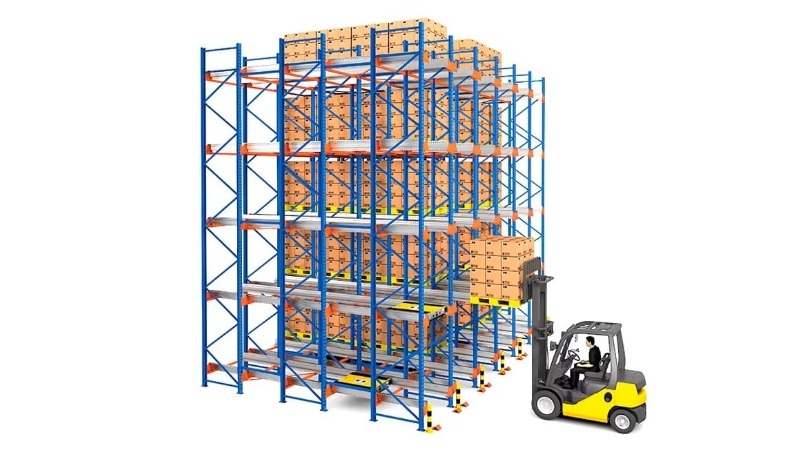
Workflow
Inbound: The forklift delivers the pallet to the aisle entrance. The shuttle, upon receiving the instruction, picks up the pallet and automatically delivers it to the designated storage location along the track.
Outbound: The shuttle retrieves the pallet from the corresponding storage location and returns it to the aisle entrance. The forklift then completes the outbound transport.
Supports both **FIFO (First-In, First-Out) and FILO (Last-In, First-Out)** modes, which can be switched as needed.
Key Features:
High Density: Space utilization reaches approximately 80%, 30%–50% higher than traditional beam racks, significantly reducing rental costs;
High Efficiency and Safety: Reduces the risk of forklift collisions in aisles, allows for 24-hour continuous operation, and significantly improves single-aisle throughput;
High Flexibility: Modular design, expandable in layers/rows; suitable for cold storage and ambient temperatures, low-temperature models withstand -30℃;
Cost: Initial equipment investment is higher than ordinary racking, but long-term labor and rental costs are more favorable.
Applicable and Inapplicable Scenarios
Best Scenarios: High-volume, low-SKU warehouses (food, cold chain, tobacco, chemicals, manufacturing raw materials/finished products), cold storage (reducing low-temperature work for personnel), warehouses with expensive land/rent;
Less Suitable Scenarios: High-volume, low-batch, high-frequency splitting of multiple SKUs, small warehouses with limited budgets and low throughput.
Selection Tips: First determine pallet size/load capacity, warehouse ceiling height, inbound/outbound frequency, and whether FIFO is required, then determine the number of shuttles, aisle depth, and system configuration; barcode/RFID can be used to achieve automatic inventory and traceability.